
We help organisations rebuild the partnership between themselves and their employees. Goals that are better aligned. Motivations that are better understood. More open and mutually rewarding dialogue. More passionate employees creating more meaningful action, trust and advocacy.
We do this by evolving an organisation’s operating model using the right blend of talent development techniques, tools and transformation models. . A talent development programme guides the transition from the current state to the new model.
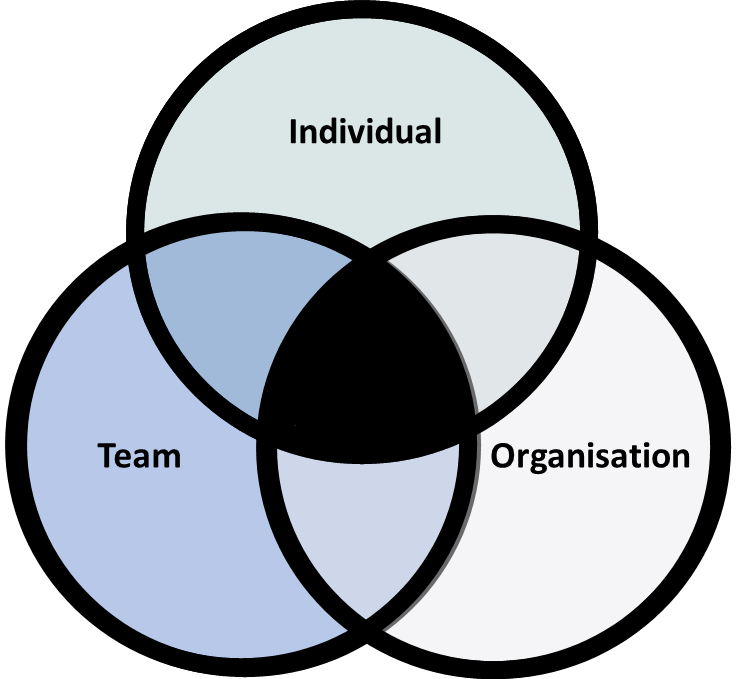
Research has shown that when coaching and personal development are integrated within all three domains, productivity can rise by over 80%’, employee performance can increase by 70%^ and leadership effectiveness can improve by 60%¬.
Our talent development programme considers all the factors which might be affecting talent performance across the organisation, its team and employees including vision alignment, future skills readiness, change management, leadership style and employee satisfaction levels.
The process starts with an introductory call - email hello@whatnowwhatnext.co.uk to arrange. We will then run a Talent Development Assessment, which helps us identify the critical talent development topics on which to focus.
We work on improving alignment, understanding and trust:
Alignment to the organisation’s vision, business goals and talent goals (e.g. leadership, diversity).
Alignment between the organisation’s, teams’ and employees’ goals.
We help optimise and prepare the organisation’s talent model for future challenges:
Talent development programmes and designed and tailored to meet different organisational requirements, current circumstances and future challenges.
An action-driven approach to talent management, delivering both short-term fixes and longer-term sustainable improvements to the organisation’s talent model.
Ongoing check-ins to measure, track and optimise progress against talent objectives
We build performance, satisfaction, trust and advocacy on an ongoing basis:
Measurement of progress against quantifiable targets, which show value to both the organisation and its employees.
Ongoing check-ins to measure, track and optimise progress against talent objectives.
* Gallup State of the Global Workforce report, 2025We build performance, satisfaction, trust
‘ Olivero, Bane, and Kopelman (1997) "Executive Coaching as a Transfer of Training Tool,"
^ ICF Global Coaching Client Study (2009) in association with PwC and the Association Resource Centre.
¬ International Coaching Federation (ICF) report (2021) in conjunction with the HR Research Institute
It’s always been critically important for an organisation to find the best way to manage and inspire their employees. The right talent model enables every employee to thrive, and the organisation to thrive as a result.
However, organisations are facing some significant workforce challenges. Increased churn. Low employee motivation. A virtual and increasingly disconnected workforce. Increased requirements for new skills and retraining. Uncertainty over the nature and timing of the changes AI will entail. The pressure to cut costs while sustaining performance.
In 2024, only 21% of employees reported being engaged at work.*
Working with organisations: building employee alignment, performance and advocacy.

It’s always been critically important for an organisation to find the best way to manage and inspire their employees. The right talent model enables every employee to thrive, and the organisation to thrive as a result.
However, organisations are facing some significant workforce challenges. Increased churn. Low employee motivation. A virtual and increasingly disconnected workforce. Increased requirements for new skills and retraining. Uncertainty over the nature and timing of the changes AI will entail. The pressure to cut costs while sustaining performance.

In 2024, only 21% of employees reported being engaged at work.*
We help organisations rebuild the partnership between themselves and their employees. Goals that are better aligned. Motivations that are better understood. More open and mutually rewarding dialogue. More passionate employees creating more meaningful action, trust and advocacy.
We do this by evolving the organisation’s operating model using the right blend of talent development techniques, tools and transformation models. A talent development programme guides the transition from the current state to the new model.
Research has shown that when coaching and personal development are integrated within all three domains, productivity can rise by over 80%’, employee performance can increase by 70%^ and leadership effectiveness can improve by 60%¬.
Our talent development programme considers all the factors which might be affecting talent performance across the organisation, its team and employees including vision alignment, future skills readiness, change management, leadership style and employee satisfaction levels.
The process starts with an introductory call - email hello@whatnowwhatnext.co.uk to arrange. We will then run a Talent Development Assessment, which helps us identify the critical talent development topics on which to focus.
We work on improving alignment, understanding and trust:
Alignment to the organisation’s vision, business goals and talent goals (e.g. leadership, diversity).
Alignment between the organisation’s, teams’ and employees’ goals.
We help optimise and prepare the organisation’s talent model for future challenges:
Talent development programmes and designed and tailored to meet different organisational requirements, current circumstances and future challenges.
An action-driven approach to talent management, delivering both short-term fixes and longer-term sustainable improvements to the organisation’s talent model.
Ongoing check-ins to measure, track and optimise progress against talent objectives
We build performance, satisfaction, trust and advocacy on an ongoing basis:
Measurement of progress against quantifiable targets, which show value to both the organisation and its employees.
Ongoing check-ins to measure, track and optimise progress against talent objectives.
* Gallup State of the Global Workforce report, 2025We build performance, satisfaction, trust
‘ Olivero, Bane, and Kopelman (1997) "Executive Coaching as a Transfer of Training Tool,"
^ ICF Global Coaching Client Study (2009) in association with PwC and the Association Resource Centre.
¬ International Coaching Federation (ICF) report (2021) in conjunction with the HR Research Institute