
Underpinning every one of our talent development exercises, workshops or programmes is guidance and training on the talent development competencies that matter most to you and your team. That will help you perform better and be happier.
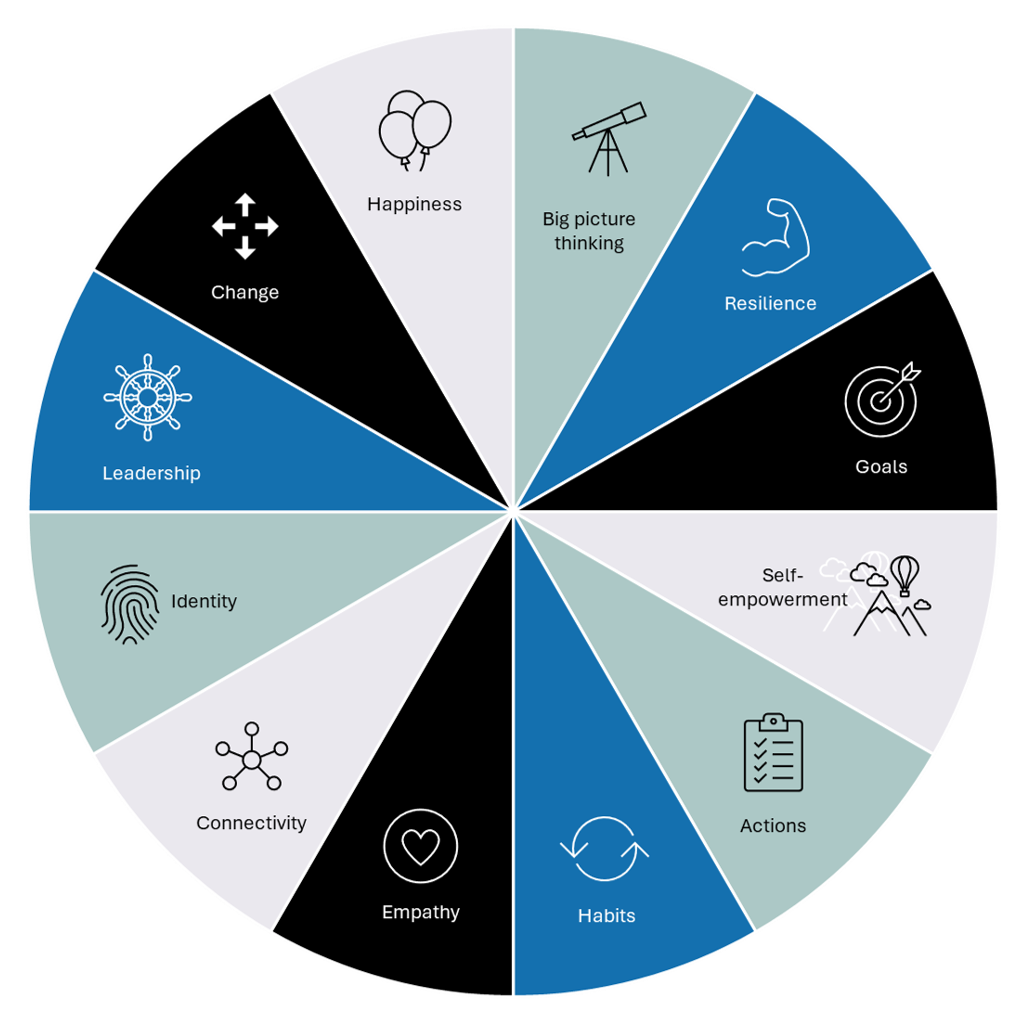
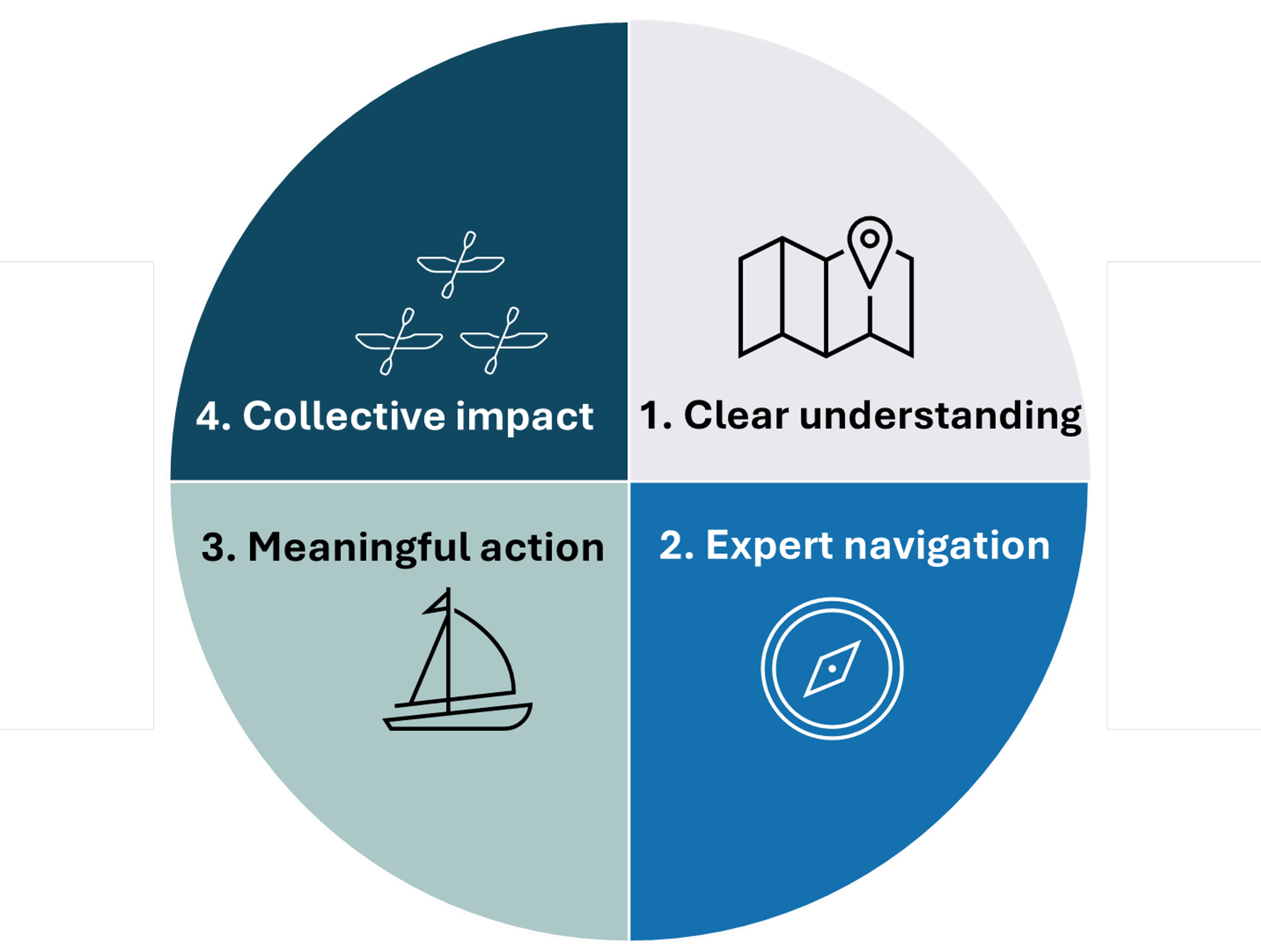
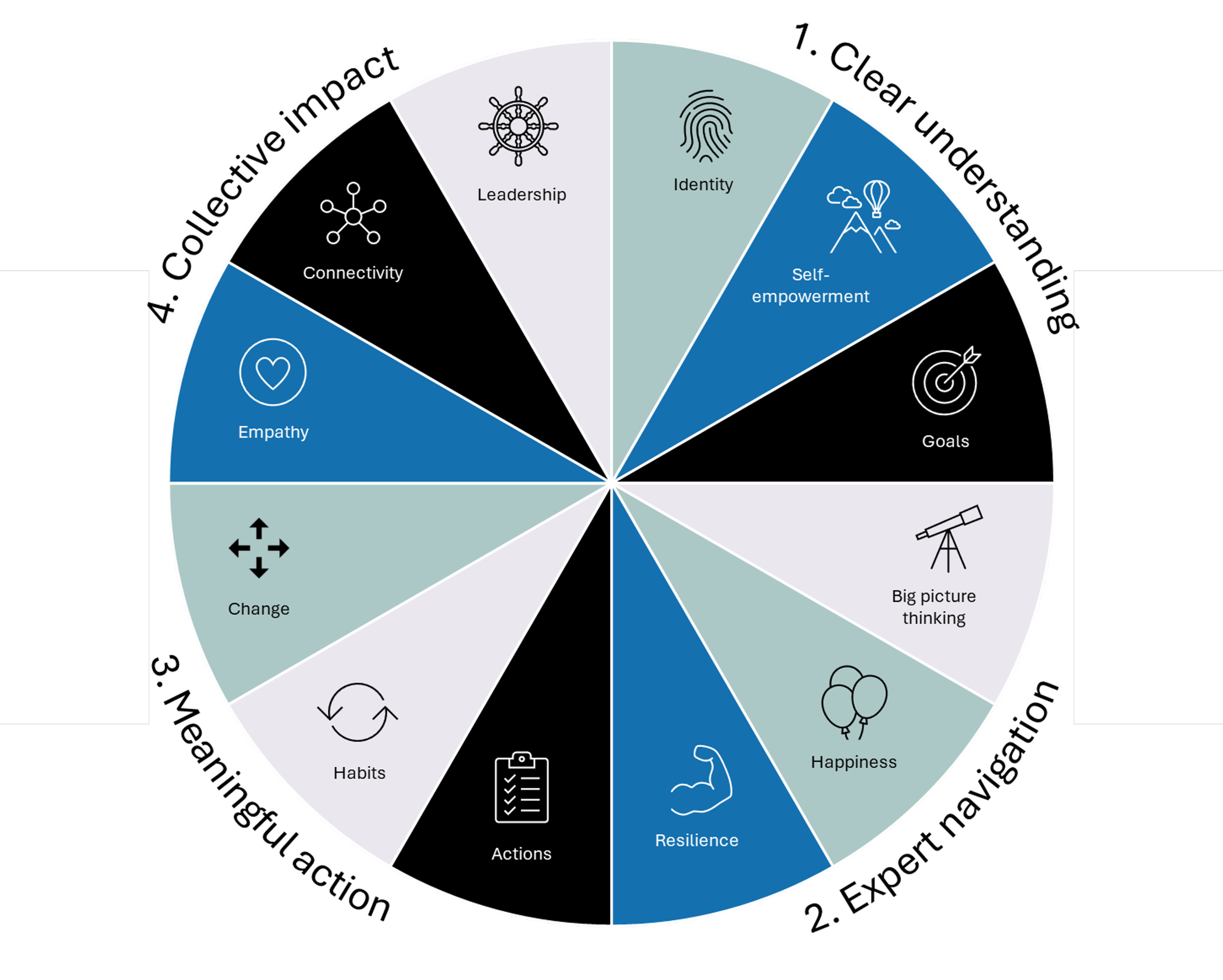
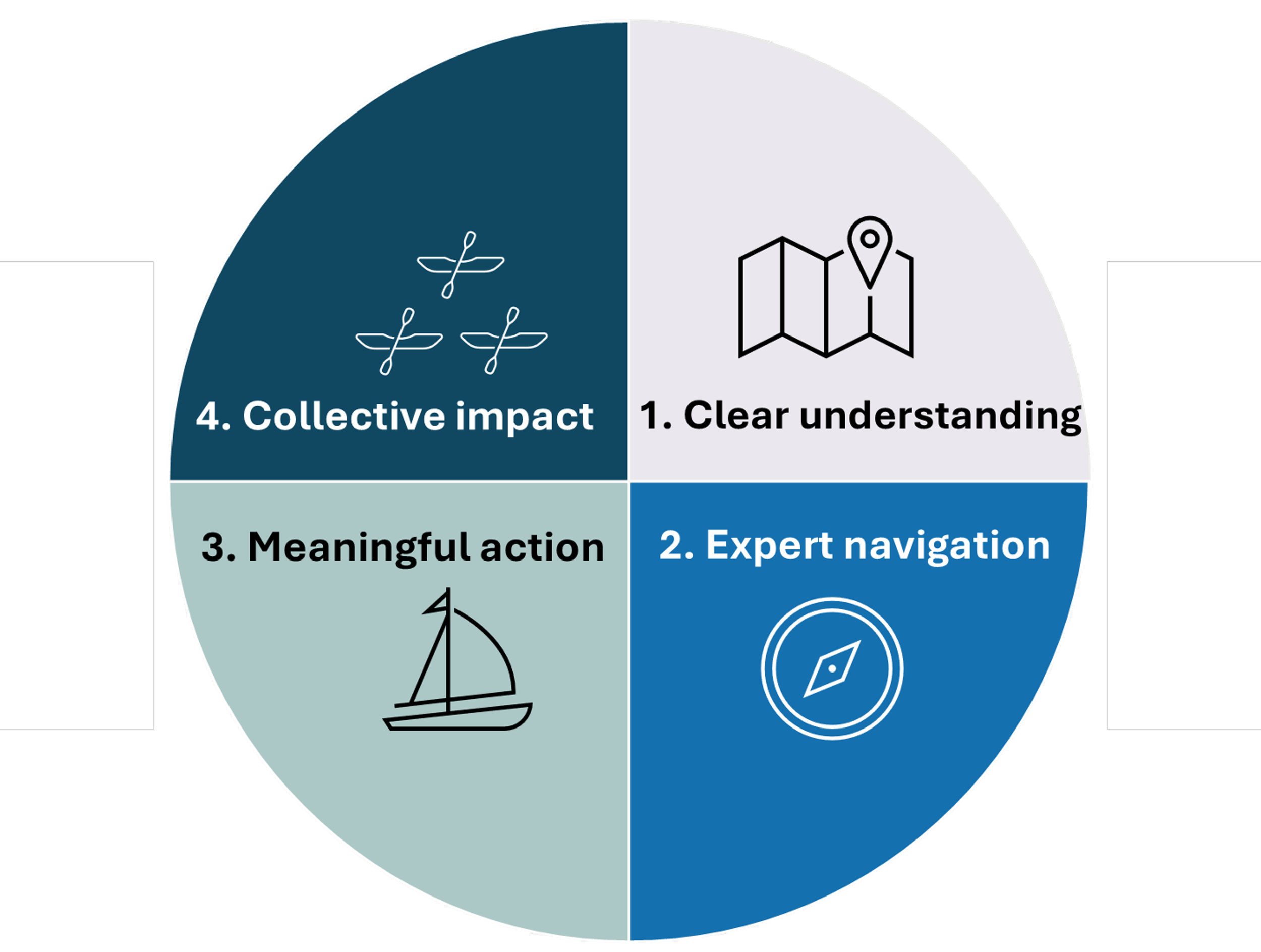
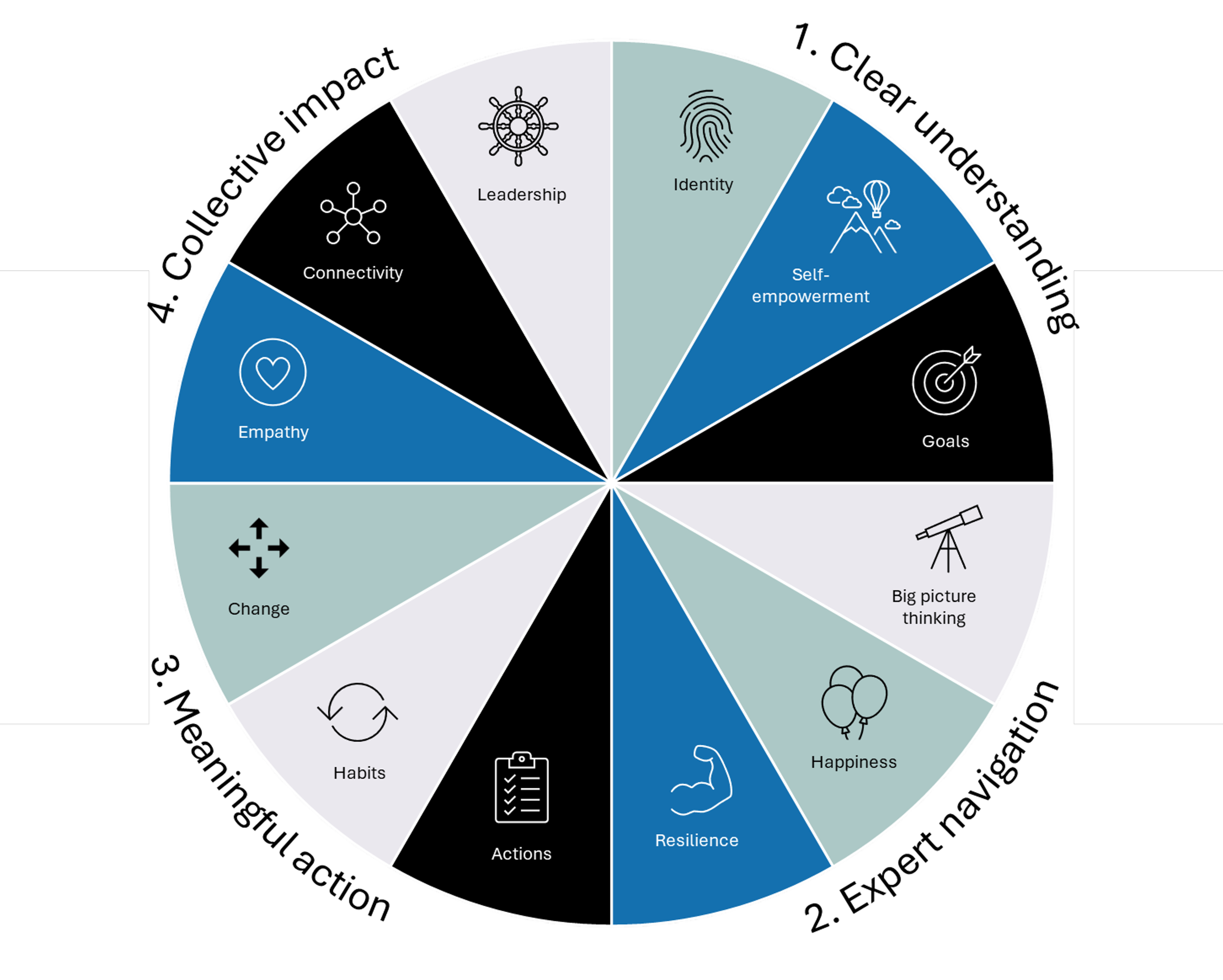
We focus and upskill people on 12 core development competencies, which we believe will drive most positive impact and change in today’s ever-changing world. We’ve divided them into four groups:
Group 1: Clear understanding - Identity, Self-empowerment, Goals
Group 2: Expert navigation - Big picture thinking, Happiness, Resilience.
Group 3: Meaningful action - Actions, Habits, Change.
Group 4: Collective impact - Empathy, connectivity, leadership.
For the past five years, I’ve collated and categorised every tip, tool and technique with which I’ve come into contact. Anything that helped people unlock their potential, be more fulfilled and be more productive. I have reviewed every one of these to look for patterns and commonalities – what do I get asked about most, what tips have I presented most frequently, which techniques have had the greatest, positive impact on people’s lives.
In addition, I have analysed all the books and articles I’ve read and podcasts I’ve listened to on wellbeing and related topics – and made sure these were covered within my competencies list. For example, when looking at the World Economic Forum’s ‘Future of Jobs’ report, I’ve made sure the competencies includes the skills it lists as most in demand, when it comes to productivity and wellbeing. Skills like resilience, flexibility/agility, leadership, creative thinking and self-awareness.
The 12 competencies are my personal take, based on my experience to date, on what has most impact. As such, they don’t cover everything. And they will change over time, as people’s needs and the demands of the workplace evolve.
For each competency, I have collated and created a set of exercises, techniques and tools designed to help individuals and people improve their understanding, application and performance. I’m constantly testing and tweaking these exercises in development sessions and workshops. To see what resonates and what sticks.
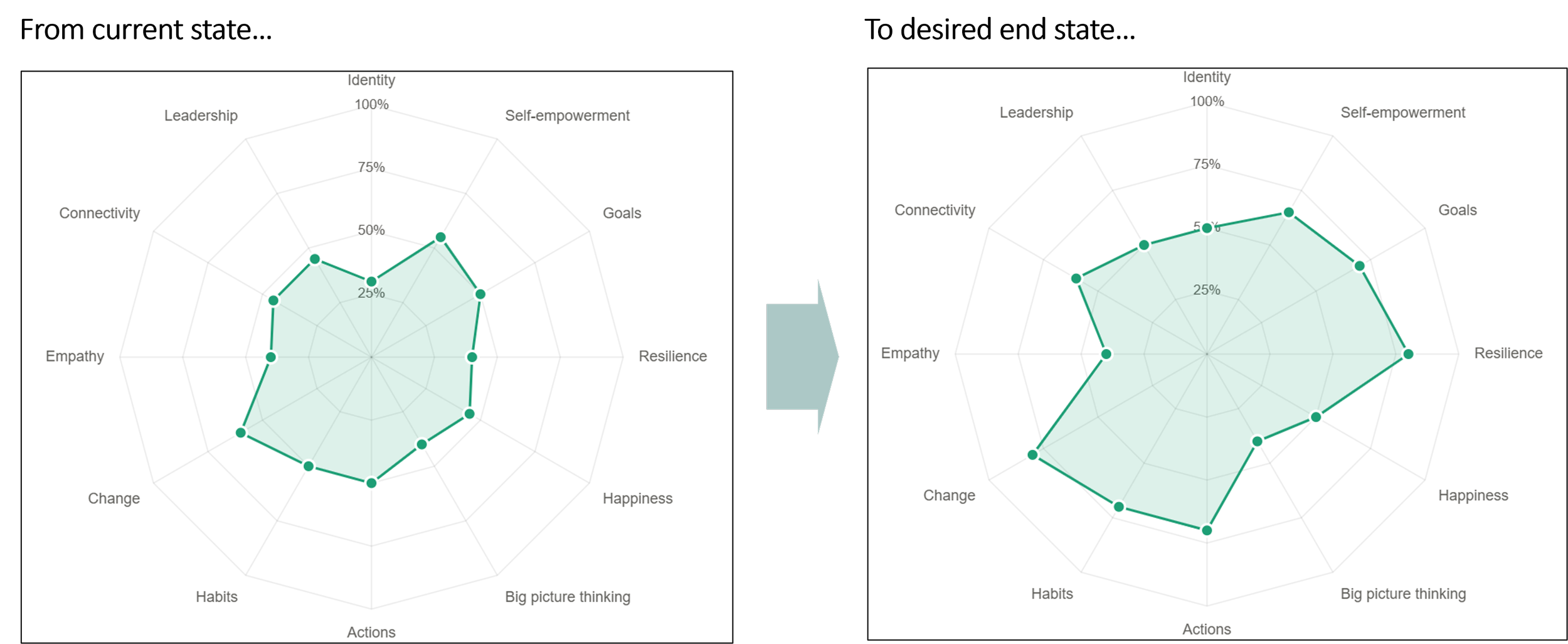
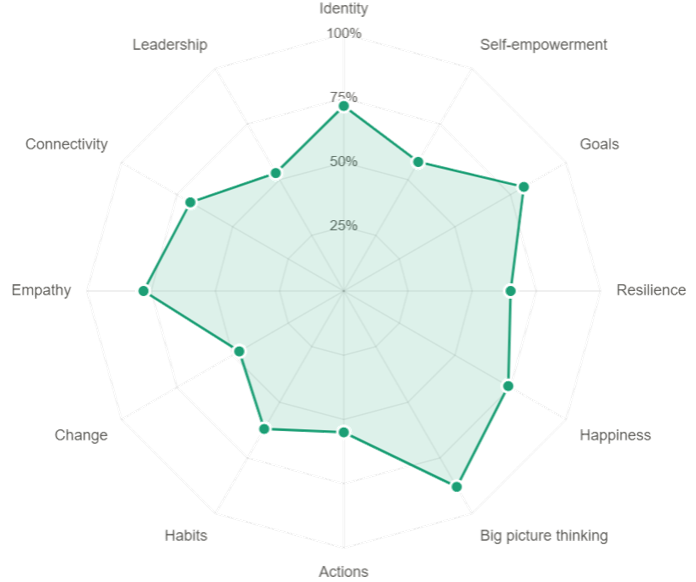
Our Talent Development Assessment explores current performance across our 12 core development competencies, identifying SWOTs and recommendations on where to act first.
We then define a desired end state for development competency, based on the team/individual’s specific brief, goals and challenges. In the example illustrated, a sales team is facing a significant increase in revenue targets, combined with the introduction of AI to drive efficiency. Accordingly, team targets have been set across all competencies to help support the achievement of the team’s goals.
The aim of our Talent Development Curriculum is to provide some guidance on the key topics, which arise in the conversations with our clients. We draw on these topics in all our work – with individuals, teams and organisations. Our aim is that the tips and techniques we outline on each topic will enable people to improve their current habits and share their stories on what’s working for them. For each topic, we will explore:
Its definition
Key challenges faced
Techniques and tools to help people overcome these challenges and achieve their goals
We evolve the curriculum on an ongoing basis, based on our clients’ needs and feedback.
Talent development competencies designed for an ever-changing world
Our Talent Development Curriculum
Talent development competencies designed for an
ever-changing world
Underpinning every one of our talent development exercises, workshops or programmes is guidance and training on the talent development competencies that matter most to you and your team. That will help you perform better and be happier.
We focus and upskill people on 12 core development competencies, which we believe will drive most positive impact and change in today’s ever-changing world. We’ve divided them into four groups:
Group 1: Clear understanding
Identity, Self-empowerment, Goals.
Group 2: Expert navigation
Big picture thinking, Happiness, Resilience.
Group 3: Meaningful action
Actions, Habits, Change.
Group 4: Collective impact
Empathy, connectivity, leadership.
For the past five years, I’ve collated and categorised every tip, tool and technique with which I’ve come into contact. Anything that helped people unlock their potential, be more fulfilled and be more productive. I have reviewed every one of these to look for patterns and commonalities – what do I get asked about most, what tips have I presented most frequently, which techniques have had the greatest, positive impact on people’s lives.
In addition, I have analysed all the books and articles I’ve read and podcasts I’ve listened to on wellbeing and related topics – and made sure these were covered within my competencies list. For example, when looking at the World Economic Forum’s ‘Future of Jobs’ report, I’ve made sure the competencies includes the skills it lists as most in demand, when it comes to productivity and wellbeing. Skills like resilience, flexibility/agility, leadership, creative thinking and self-awareness.
The 12 competencies are my personal take, based on my experience to date, on what has most impact. As such, they don’t cover everything. And they will change over time, as people’s needs and the demands of the workplace evolve.
For each competency, I have collated and created a set of exercises, techniques and tools designed to help individuals and people improve their understanding, application and performance. I’m constantly testing and tweaking these exercises in development sessions and workshops. To see what resonates and what sticks.
Our Talent Development Assessment explores current performance across our 12 core development competencies, identifying SWOTs and recommendations on where to act first.
We then define a desired end state for development competency, based on the team/individual’s specific brief, goals and challenges. In the example illustrated, a sales team is facing a significant increase in revenue targets, combined with the introduction of AI to drive efficiency. Accordingly, team targets have been set across all competencies to help support the achievement of the team’s goals.