
Why I started What Now? What Next?
More change. More uncertainty. More stress. More to do. Seeing how these headwinds, stresses and pressures were affecting people is what led me to create What Now? What Next?. To help people deal with the new normal of Volatility, Uncertainty, Complexity and Ambiguity (“VUCA”). Here’s what I was increasingly seeing:
I’ve worked in communications, tech, data and AI for the past 10 years. But the biggest day-to-day factor I saw improve performance was none of those. Instead, it was people in the right roles, with confidence, motivation and the right skills to achieve their goals. Skills in familiar but critical areas such as resilience, goal setting, action taking, resilience, teamwork and leadership.
When there was a meaningful focus on these skills within the organisation, it created a double win as not only did performance improve, but so did levels of motivation, happiness and fulfilment.
A general reduction in time to develop, grow and take care of employees’ progress has exacerbated this skills gap.
Too much time was spent discussing to do lists and temporary fixes, not on how to develop long-term solutions and groove habits - to foster ongoing, sustainable progress.
But when the right habits stuck and long-term fixes lasted, much greater value was generated for everyone involved - the individual, team and organisation.
So, here’s what I did:
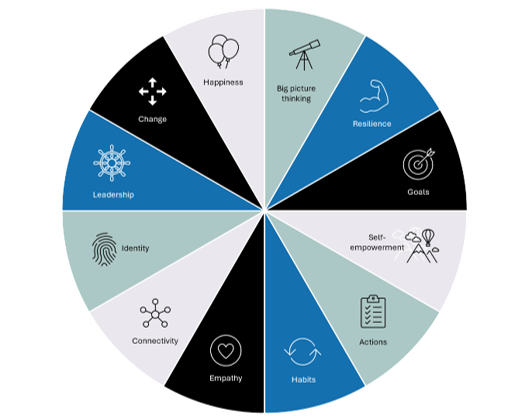
I created a talent development curriculum – 12 core competencies addressing the challenges I saw people facing. I read, listened to, discussed, synthesised and analysed as many great development skills and techniques as I could, to be able to map them to people’s needs and circumstances.
Then, I created a method for creating and managing a talent development programme, using a combination of profiling, coaching, training and habit development techniques. For any organisation, team or individual, this enabled me to understand which challenges were most important, which solutions would have most effect, what actions we needed to take and how we could make these changes stick.
To optimise this process, I then considered the right blend of people and AI tools - assessing when a personal connection is required rather the easy accessibility afforded by AI tools.
When I did this, I had the following types of people in mind:
Organisations in talent-driven industries facing significant change through factors such as AI, automation, changing socio-economic conditions and generational behaviour change.
Teams in dynamic situations, where success will require improved performance, confident management and greater collaboration.
Leaders who want to inject momentum, create meaningful action and appreciate the value people performing at a high level brings to their organisation.
So, if you are, or aspire to be:
A Change Embracer, planning for long-term team success.
A Team Energiser, who knows their own success is inextricably tied to that of their team.
A Data Explorer, whose decision-making is guided by greater understanding, empathy and a little behavioural science.
A Purpose Finder, who wants what they do to have meaning and matter.
…drop me a line (hello@whatnowwhatnext.co.uk) and let’s discuss your specific challenges and where it might make most sense to focus.
